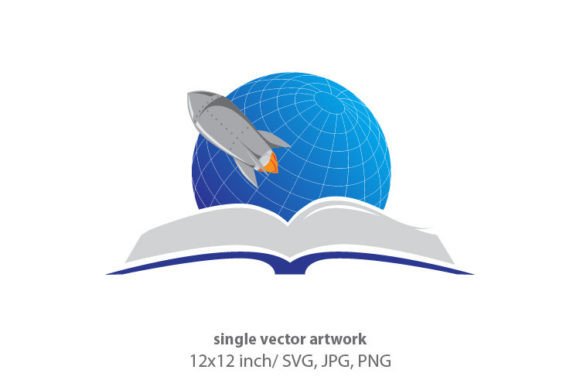
Open Book, Rocket and Planet: Elevating Digital Design with Vector Art Assets
In the rapidly evolving landscape of digital content creation, the demand for high-quality, versatile visual assets has never been greater. Whether you are a seasoned graphic designer, an educator crafting engaging materials, or a small business owner looking to establish a brand identity, the foundation of your visual communication often rests on the quality of your core elements. This is where specialized collections, such as those featuring an Open Book, Rocket and Planet, become invaluable resources. These are not merely static images; they are carefully constructed digital graphics designed to serve as building blocks for a wide array of creative projects.
Understanding the technical specifications and creative potential of these assets is crucial for maximizing their utility. When we discuss files created in a vector program like Adobe Illustrator, we are referring to a standard of quality that ensures scalability and precision. The specific combination of an open book, a rocket, and a planet offers a rich thematic palette that bridges education, exploration, and imagination. By leveraging these elements in formats such as SVG, JPG, and PNG, creators can produce professional-grade outputs that resonate with diverse audiences.
The Technical Advantage of Vector-Based Artboards
The cornerstone of any high-quality digital asset is its source file format. The mention of an artboard size of 12 x 12 inches at a resolution of 300 DPI in the RGB color palette speaks to a meticulous preparation process. However, the true power lies in the fact that these files are made in a vector program. Vector graphics differ fundamentally from raster images. While raster images are composed of pixels and can become pixelated or blurry when enlarged, vector graphics use mathematical equations to define shapes, lines, and colors. This means that an image of a rocket or a planet can be scaled from the size of a postage stamp to the size of a billboard without any loss in clarity or sharpness.
For professionals working in Adobe Illustrator, this vector origin provides unparalleled flexibility. You can manipulate anchor points, adjust curves, and modify colors with ease. This level of control is essential for custom logo design, where a unique identity must remain crisp across various mediums, from business cards to website headers. The 300 DPI specification ensures that when these vector designs are rasterized for print purposes, they maintain a high level of detail, preventing the jagged edges that often plague lower-resolution downloads.
File Formats and Their Specific Use Cases
The versatility of the Open Book, Rocket and Planet collection is further enhanced by the provision of multiple file formats. Each format serves a distinct purpose in the workflow of designers and creators:
- SVG (Scalable Vector Graphics): This format is ideal for web design and digital applications. SVGs are lightweight, load quickly, and remain sharp on any screen resolution, including high-density Retina displays. They are perfect for interactive elements on websites, such as icons that change color on hover.
- JPG (Joint Photographic Experts Group): While not supporting transparency, JPGs are universally compatible and excellent for photographic contexts or when file size needs to be minimized for email attachments or social media posts where transparency is not required.
- PNG (Portable Network Graphics): PNGs support transparency, making them indispensable for layering graphics. If you want to place the rocket element over a colored background or integrate the open book into a complex composite image, the PNG format ensures clean edges without unwanted white backgrounds.
By providing these three formats, the asset collection accommodates both print and digital workflows, ensuring that users do not need to convert files themselves, which can often lead to quality degradation.
Thematic Synergy: Education, Exploration, and Imagination
The specific imagery of an open book, a rocket, and a planet is not arbitrary. It represents a powerful narrative triad that appeals to a broad spectrum of users. The open book symbolizes knowledge, learning, and storytelling. The rocket represents ambition, speed, innovation, and the journey forward. The planet signifies global reach, science, and the vastness of possibility. When combined, these elements create a visual language that is particularly effective in educational and inspirational contexts.
Educators and researchers can utilize these graphics to create engaging presentations, worksheets, and classroom decorations. The visual metaphor of a rocket launching from a book suggests that knowledge is the fuel for exploration. This can be particularly impactful in STEM (Science, Technology, Engineering, and Mathematics) education, where inspiring curiosity is as important as imparting facts. For hobbyists and parents, these elements can be used to create handmade cards or announcements for school events, science fairs, or reading challenges, adding a professional touch to personal projects.
Practical Applications Across Industries
The utility of these digital graphics extends far beyond simple decoration. Their modular nature allows for integration into a wide variety of products and services. Here are several key areas where these assets can be effectively deployed:
Branding and Logo Design
For startups in the ed-tech sector, publishing houses, or space-related tourism ventures, these elements provide a ready-made foundation for logo design. A minimalist rocket icon paired with a stylized planet can convey innovation and global vision. Because the files are vector-based, designers can easily tweak the proportions to fit square, horizontal, or vertical logo layouts. The ability to edit the RGB color palette in Adobe Illustrator allows brands to align the graphics precisely with their corporate identity guidelines.
Stationery and Print Media
Printed paper items benefit significantly from the 300 DPI resolution. Invitations for birthday parties with a space theme, announcements for academic achievements, or even corporate stationery for innovative firms can incorporate these elements seamlessly. Handmade craft items, such as scrapbooks or journals, can feature these graphics as central focal points. The clean lines of vector art ensure that even when printed on textured paper, the images remain crisp and professional.
Web and Graphic Design
In the digital realm, these assets are perfect for enhancing user interfaces. An open book icon can serve as a button for a "Read More" section, while a rocket might indicate a "Launch Project" feature. Web designers can use the SVG formats to ensure fast loading times and sharp visuals on mobile devices. Furthermore, these elements can be used in social media graphics, blog headers, and email newsletters to break up text and add visual interest, thereby increasing engagement rates.
Party Decor and Event Planning
Event planners can leverage these graphics to create cohesive themes for parties and conferences. From large-format banners to small jewelry tags or favor boxes, the scalability of the vector files ensures consistency across all touchpoints. Imagine a graduation party where the invitations, napkins, and photo booth backdrops all feature a coordinated design of rockets and planets emerging from books. This level of thematic consistency elevates the perceived value of the event.
Considerations for Effective Implementation
While these assets are designed for ease of use, there are considerations to keep in mind to ensure optimal results. First, always check the licensing terms associated with the digital graphics. Understanding whether the license allows for commercial use, modification, and redistribution is critical for business owners and professional designers. Second, when using the RGB color palette for print, be aware that colors may appear differently on screen than on paper. It is advisable to perform test prints or convert colors to CMYK if high-fidelity color matching is required for professional printing.
Additionally, while vector files are editable, users without access to Adobe Illustrator or similar software should rely on the provided PNG and JPG files. For those creating handmade craft items, printing the PNGs on high-quality sticker paper or cardstock can yield excellent results without the need for advanced design skills. The key is to match the file format to the toolset and the final output medium.
In conclusion, the Open Book, Rocket and Planet digital graphics collection represents more than just a set of images. It is a versatile toolkit for creators across various disciplines. By understanding the technical benefits of vector-based artboards, the specific uses of SVG, JPG, and PNG formats, and the thematic power of the imagery, users can unlock new levels of creativity and professionalism in their projects. Whether you are designing a logo, crafting a handmade card, or building a website, these elements provide a solid foundation for visual storytelling that is both engaging and effective.