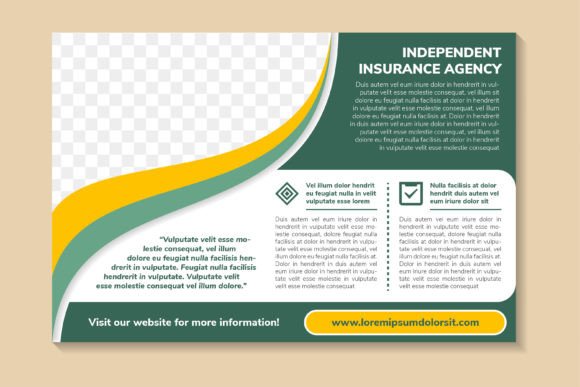
Modernizing Independent Insurance Marketing with a Professional Horizontal Flyer
In the competitive landscape of financial services, first impressions are not just important—they are decisive. For independent insurance agents, the challenge often lies not in the quality of their service, but in how effectively they communicate trust and professionalism before a client even picks up the phone. This is where strategic visual assets come into play. A well-designed Insurance Agency Horizontal Flyer serves as more than just a digital advertisement; it is a cornerstone of modern brand identity, bridging the gap between traditional reliability and contemporary digital marketing needs.
The shift toward online advertising has transformed how insurance products are promoted. Gone are the days when a simple text-based email or a cluttered print ad would suffice. Today’s consumers, ranging from young homeowners to seasoned business owners, expect sleek, intuitive, and visually appealing content. They scan information quickly, making the design of your promotional materials a critical factor in engagement. A horizontal web banner or flyer that utilizes clean lines, ample white space, and strategic color psychology can significantly enhance click-through rates and brand recall.
The Evolution of Insurance Design Trends
Historically, insurance marketing was dominated by dense text, stock photos of handshakes, and conservative color palettes that often felt outdated. However, current trends in graphic design for the finance and insurance sectors emphasize clarity, transparency, and approachability. The modern aesthetic favors minimalism combined with dynamic elements. This is evident in the popularity of templates featuring abstract curves, wavy lines, and vibrant yet professional accent colors like green and yellow against a crisp white background.
These design choices are not arbitrary. The use of green often symbolizes growth, stability, and money, while yellow evokes optimism, energy, and attention. When paired with a clean white background, these colors create a sense of openness and honesty—qualities that potential clients desperately seek in an insurance provider. The inclusion of curve and wave elements adds a sense of motion and fluidity, suggesting that the agency is adaptable and forward-thinking, rather than static and bureaucratic.
Furthermore, the integration of a photo collage space allows agencies to humanize their brand. Instead of relying solely on abstract graphics, agents can showcase real team members, happy clients, or community involvement. This blend of professional vector graphics and authentic photography creates a balanced narrative that is both corporate and personal, addressing the dual need for institutional trust and individual connection.
Why Vector-Based Templates Matter for Professional Branding
For entrepreneurs, marketers, and independent agents who may not have a dedicated design team, access to high-quality, editable templates is invaluable. The technical specifications of a design file can make or break its utility across various platforms. A premium Insurance Agency Horizontal Flyer template is typically delivered in high-resolution formats, such as 300 DPI for print and scalable vector formats for digital use.
The distinction between raster and vector graphics is crucial here. Raster images (like standard JPGs) can become pixelated when resized, which is disastrous for professional branding. In contrast, 100% vector graphics ensure that every curve, line, and shape remains crisp and clear, whether the flyer is viewed on a smartphone screen or printed as a large poster. This scalability is essential for omnichannel marketing strategies where the same visual asset might be used for a website header, a social media ad, a printed brochure, or a presentation slide.
Moreover, the organization of the file plays a significant role in workflow efficiency. A well-organized template with editable text, shapes, and colors allows users to customize the design without needing advanced graphic design skills. Whether you are using Adobe Illustrator (AI), EPS, SVG, or even modifying a high-res JPG, the ability to quickly swap out placeholder text for your agency’s unique value proposition saves time and reduces costs. This flexibility empowers independent agents to maintain consistent branding across all touchpoints without the overhead of hiring external designers for every minor update.
Practical Applications in Online and Offline Marketing
The versatility of a horizontal flyer template extends far beyond a single use case. In the context of online marketing, these designs are perfect for creating eye-catching web banners, email headers, and social media cover images. The horizontal layout aligns naturally with the way users consume content on desktop and mobile devices, fitting seamlessly into website hero sections or LinkedIn profile backgrounds.
Consider the scenario of an independent agent launching a new campaign for small business insurance. Using a template with designated space for an infographic or key statistics, the agent can highlight data points about risk management or cost savings. The clean layout ensures that the message is not lost in visual noise. Similarly, for print advertising, the same design can be adapted into a tri-fold brochure or a direct mail postcard. The high-resolution 300 DPI output ensures that the printed material feels premium to the touch, reinforcing the perception of high-quality service.
Another practical application is in presentations and reports. Insurance agents often need to pitch to corporate clients or present annual reviews to existing policyholders. A cohesive visual theme, established by the flyer’s design elements, can be carried over into PowerPoint slides or PDF reports. This consistency builds brand recognition and reinforces professionalism. When a client sees the same color scheme, typography, and graphic style across your flyer, website, and proposal document, it subconsciously signals reliability and attention to detail.
Customization Strategies for Maximum Impact
While templates provide a strong foundation, customization is key to standing out. Here are several recommendations for adapting an Insurance Agency Horizontal Flyer to meet specific business goals:
- Leverage the Photo Collage Space: Use high-quality, authentic images of your team or local landmarks. Avoid generic stock photos if possible. Real faces build trust faster than abstract icons.
- Highlight Your Unique Value Proposition: Use the editable text fields to clearly state what sets your agency apart. Is it 24/7 support? Personalized plans? Local expertise? Keep the copy concise and impactful.
- Maintain Color Consistency: While the template offers green and yellow accents, ensure these align with your existing brand guidelines. If your logo uses different shades, adjust the vector shapes accordingly to maintain brand integrity.
- Optimize for Call-to-Action (CTA): Ensure that your contact information or CTA button is prominent. In a horizontal layout, the right side is often the natural endpoint for the eye, making it an ideal spot for a "Get a Quote" button or phone number.
- Adapt for Different Platforms: Export versions optimized for web (72 DPI, RGB color mode) and print (300 DPI, CMYK color mode). This ensures optimal performance and visual fidelity across all channels.
The Role of Technology in Modern Insurance Promotion
The availability of sophisticated design tools and templates reflects a broader shift in the insurance industry toward technology-driven customer experiences. Clients now expect seamless digital interactions, from obtaining quotes to filing claims. Your marketing materials should reflect this technological proficiency. A modern, vector-based flyer suggests that your agency is up-to-date with current tools and practices.
Furthermore, the ease of editing these files supports agile marketing. In a rapidly changing market, the ability to quickly update promotional materials in response to new regulations, seasonal trends, or special offers is a competitive advantage. Instead of waiting weeks for a designer to create a new asset, an agent can modify an existing template in minutes. This agility allows for more responsive and relevant marketing campaigns.
In conclusion, investing in a high-quality, versatile design template like an Insurance Agency Horizontal Flyer is a strategic move for any independent insurance professional. It combines aesthetic appeal with functional flexibility, enabling agents to project a image of modernity, trust, and professionalism. By understanding the principles of effective design and leveraging the technical benefits of vector graphics, insurance agencies can create compelling visual narratives that resonate with today’s discerning consumers. Whether used for online advertising, print promotions, or corporate presentations, these templates provide the foundational structure needed to elevate your brand and drive meaningful engagement.